 English
 שפה עברית
 беларускі
 Punjabi
 Español
 Português
 русский
 Français
 日本語
日本語 Deutsch
 Italiano
 Nederlands
 한국어
한국어 Malay
Malay हिन्दी
 Türkçe
 العربية
 Indonesia
 Română
 Srpski језик
How Are Digital Table Clocks Shaping Daily Time Management?
Abstract
Digital Table Clocks have become a core component of modern indoor timekeeping across residential, commercial, and institutional environments. This article provides a comprehensive examination of Digital Table Clocks, focusing on their structural design, technical parameters, functional integration, and evolving role in daily routines. By addressing how these devices operate, how they are selected, and how they adapt to emerging usage scenarios, the content aims to support informed decision-making for buyers, distributors, and project planners seeking reliable time-display solutions.
Product Overview and Central Thesis
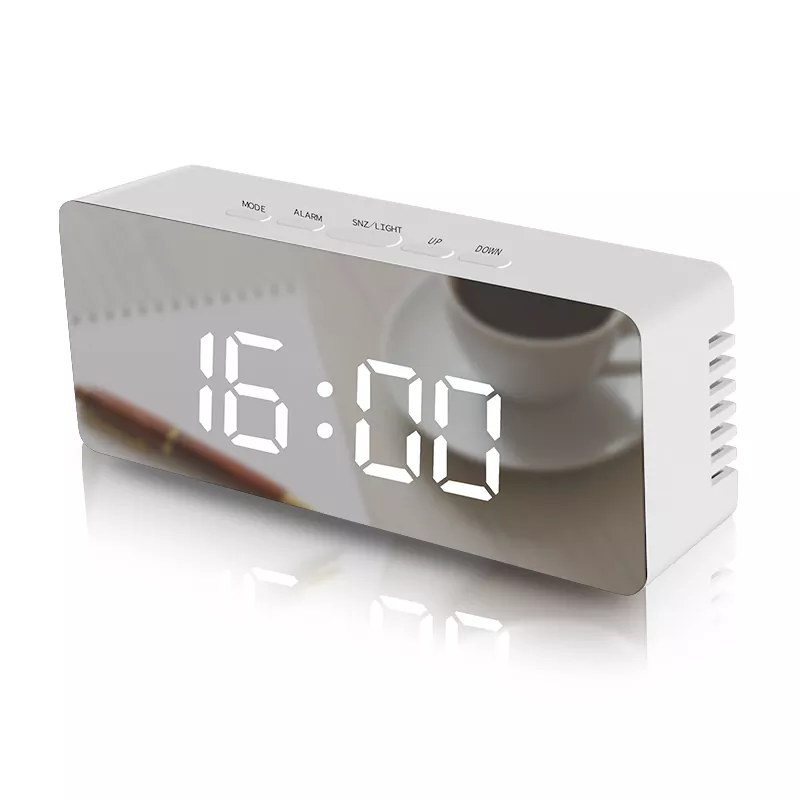
A Digital Table Clock is an electronic time-display device designed for placement on desks, bedside tables, counters, or workstations. Unlike mechanical or analog alternatives, it relies on electronic circuitry and digital displays—commonly LED or LCD—to present time data with precision and clarity. The central focus of this article is to explain how Digital Table Clocks function within modern environments, how their technical parameters influence performance, and how future developments are reshaping expectations for table-based timekeeping solutions.
The discussion is structured around four core nodes: technical configuration, application scenarios, user interaction and reliability, and long-term industry direction. Each node addresses practical and technical questions commonly searched by users, ensuring alignment with search intent and regional reading habits.
Table of Contents
- How Do Digital Table Clocks Achieve Accurate Time Display?
- How Are Digital Table Clocks Applied Across Different Environments?
- How Should Digital Table Clocks Be Evaluated and Maintained?
- How Will Digital Table Clocks Evolve in the Coming Years?
- Common Questions About Digital Table Clocks
How Do Digital Table Clocks Achieve Accurate Time Display?
At the core of a Digital Table Clock is an electronic timing module, typically driven by a quartz crystal oscillator. This component generates a stable frequency that enables the internal circuit to measure time intervals with high accuracy. The measured data is processed by a microcontroller, which converts it into readable digital signals for the display unit.
Power architecture also plays a critical role. Most Digital Table Clocks support dual power modes, combining external power adapters with internal backup batteries. This configuration ensures time retention during power interruptions and maintains consistent performance in both residential and commercial settings.
Key Technical Parameters
| Parameter | Specification Range |
|---|---|
| Display Type | LED / LCD |
| Time Format | 12-hour / 24-hour selectable |
| Power Supply | USB, AC adapter, backup battery |
| Brightness Control | Manual or automatic dimming |
| Additional Functions | Alarm, temperature display, calendar |
These parameters determine not only visibility and usability but also compatibility with different usage contexts, such as bedrooms, offices, or hospitality spaces.
How Are Digital Table Clocks Applied Across Different Environments?
Digital Table Clocks are deployed across a wide spectrum of environments due to their compact size and immediate readability. In residential settings, they are commonly positioned in bedrooms and living areas, where clear time visibility supports daily schedules. In professional environments, such as offices and reception desks, they function as reference tools that enhance punctuality and coordination.
Hospitality and healthcare sectors also utilize Digital Table Clocks to support standardized time awareness. Their consistent display format reduces ambiguity, particularly in shared spaces where synchronized timekeeping is essential.
From an ergonomic perspective, table-based placement allows users to access time information without wall installation, making these devices suitable for temporary layouts, rental properties, and modular interiors.
How Should Digital Table Clocks Be Evaluated and Maintained?
Evaluating a Digital Table Clock involves assessing display clarity, power stability, and functional responsiveness. Display contrast and viewing angle are particularly important for environments with varying lighting conditions. Devices with adjustable brightness levels offer improved adaptability.
Maintenance requirements are generally minimal. Periodic battery replacement, surface cleaning, and firmware stability checks (for models with programmable features) ensure long-term reliability. Proper placement away from excessive humidity or heat sources further extends operational lifespan.
From a procurement standpoint, consistency in component sourcing and assembly quality directly affects product longevity and user satisfaction.
How Will Digital Table Clocks Evolve in the Coming Years?
The future development of Digital Table Clocks is closely linked to advancements in low-power electronics and display technology. Integration with ambient sensors, enhanced energy efficiency, and expanded data presentation capabilities are expected to redefine user expectations.
As smart environments continue to expand, Digital Table Clocks are increasingly positioned as standalone yet complementary devices within broader indoor ecosystems. Their evolution emphasizes reliability, clarity, and adaptability rather than complexity.
Common Questions About Digital Table Clocks
Q: How does a Digital Table Clock maintain time accuracy during power outages?
A: Most models include an internal backup battery that preserves time data when external power is disconnected, allowing the clock to resume normal operation without manual resetting.
Q: How should brightness be adjusted for nighttime use?
A: Brightness can be reduced manually through control buttons or automatically via built-in sensors, ensuring visibility without excessive light exposure.
Q: How long does a Digital Table Clock typically last?
A: With stable power supply and proper placement, a Digital Table Clock can operate reliably for several years, as electronic components experience minimal mechanical wear.
Conclusion and Brand Introduction
Digital Table Clocks continue to play a vital role in structured time management across diverse environments. Their straightforward operation, precise display, and adaptable design ensure continued relevance as indoor spaces evolve. By understanding technical parameters, application contexts, and future trends, stakeholders can better align product selection with functional requirements.
As a professional manufacturer and supplier in the electronic timekeeping sector, Shenzhen Preation Technology Co., Ltd. focuses on the development and production of reliable Digital Table Clock solutions designed for global markets. Product consistency, controlled manufacturing processes, and application-oriented design remain central to its operational philosophy.
For detailed specifications, customization options, or partnership inquiries related to Digital Table Clocks, interested parties are encouraged to contact the company directly to obtain tailored support and up-to-date product information.
Send Inquiry



X
We use cookies to offer you a better browsing experience, analyze site traffic and personalize content. By using this site, you agree to our use of cookies.
Privacy Policy