 English
 שפה עברית
 беларускі
 Punjabi
 Español
 Português
 русский
 Français
 日本語
日本語 Deutsch
 Italiano
 Nederlands
 한국어
한국어 Malay
Malay हिन्दी
 Türkçe
 العربية
 Indonesia
 Română
 Srpski језик
Vibration Alarm Clocks for the Deaf and Hearing Impaired: Alert Methods, Use Scenarios, and Daily Reliability
For most people, an alarm clock is about hearing a sound and turning it off. But for people with hearing loss, the beeping sound of a traditional alarm clock is essentially meaningless. What they need is not a louder ringtone, but a different way to perceive the signal — vibration.
The cell phone call vibrate alarm clock is a small, portable device designed specifically for this purpose. It does not rely on sound alerts. Instead, it uses vibration and flashing light to convey information: time to wake up, phone is ringing, or an alert has been triggered. For older adults with hearing impairment who also experience age-related vision decline, a version with flashing light provides an additional layer of assurance.
Shenzhen Preation Technology Co., Ltd. is a manufacturer integrating design, research and development, production, and after-sales service. Its products include various types of clocks, digital photo frames, and smart home devices, mainly exported to Europe, North and South America, Southeast Asia, Australia, and the Middle East. The company operates its own plastic injection mold factory and assembly facility, with products certified to CE, ROHS, FCC, UKCA, PSE, and other international standards. This article starts from the actual use scenarios of the hearing impaired and explains how to select a vibration alarm clock, which parameters in vibration intensity and alert methods matter, and common issues in daily use and travel.
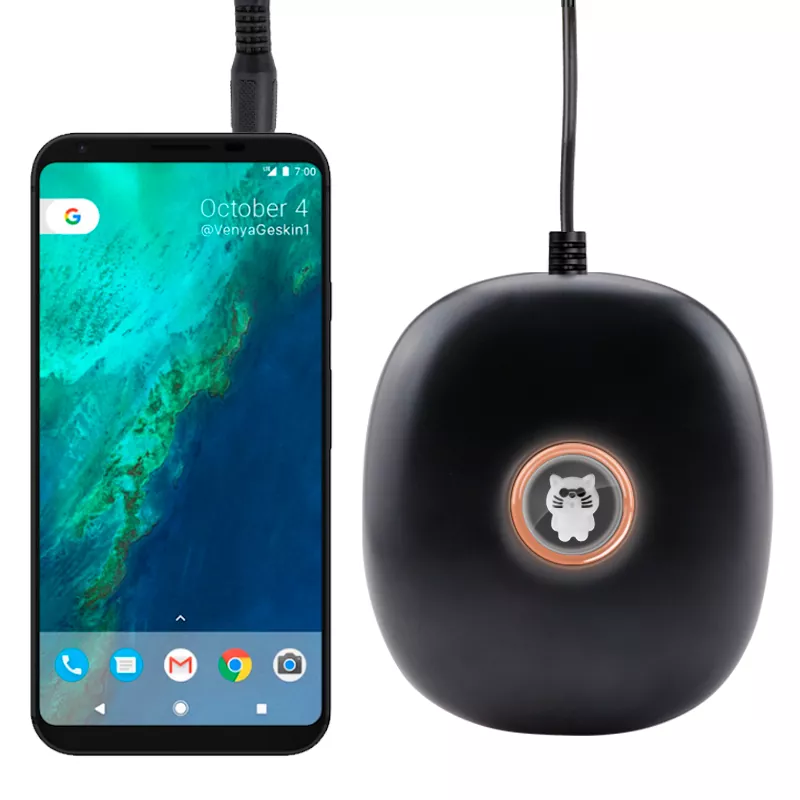
Why Vibration Alarm Clocks Deserve Attention for the Hearing Impaired
For people with hearing loss, waking up and receiving alerts is not a matter of comfort — it is a matter of whether the signal can be perceived at all. Traditional alarm clocks rely on hearing, and someone with hearing loss simply cannot receive that signal. A vibration alarm clock converts the auditory signal into a tactile signal — placed under a pillow, on a mattress, or carried on the body, the vibration transfers through the contact surface to the user.
Impact on Daily Independence
An alarm clock that reliably wakes a person means more than just not being late for appointments. It means not having to depend on others to wake up. It means being able to manage one's own schedule independently. It means living alone with confidence. An incoming call vibration reminder means not missing important phone calls — which is especially critical for elderly hearing-impaired individuals living alone.
A version with flashing light extends usability further. For older adults whose vision is also declining, a vibration-only clock placed on a nightstand may be difficult to locate. The yellow flashing light provides a visual cue, helping users find the device or confirm alert status in low-light conditions.
Typical Applications Across Different Scenarios
Bedside wake-up: Place the vibration alarm clock under the pillow or between the mattress and bedsheet. At the set time, vibration transmits through the bedding to the head and neck area. Three adjustable vibration levels allow users to select intensity based on their sleep depth and physical sensitivity.
Incoming call alert: Connect the clock to a mobile phone via AUX audio cable or Type-C cable. When a call comes in, the clock simultaneously vibrates and flashes a yellow light. This feature is also useful for mildly hearing-impaired users who often leave their phones in bags or pockets and cannot feel the phone's own vibration.
Portable use: The device itself is compact (9.3 x 10.5 x 3.4 cm, 200 grams) and can be carried in a pocket or bag as an alert tool when away from home. The built-in 1200mAh rechargeable battery supports multiple days of use on a single charge.
Child lock and tamper prevention: In homes with young children, buttons pressed accidentally can change alarm settings. The child lock function locks the buttons when needed, preventing unintended changes.
Key Technical Specifications of Vibration Alarm Clocks
A truly usable vibration alarm clock is defined by several hard parameters, not simply by "being able to vibrate."
Vibration Intensity, Alert Methods, and Power Configuration
The main specifications of reference model TS-BC680-1-B are summarized below:
| Parameter | Specification | Note |
|---|---|---|
| Product dimensions | 9.3 x 10.5 x 3.4 cm | Palm-sized, portable |
| Product weight | 200 g | Substantial but not heavy |
| Power supply | Built-in 1200mAh rechargeable battery | Rechargeable |
| Charging interface | Type-C / AUX audio cable | 1.35m cable length |
| Time display | LED digital display | 12/24H switchable |
| Number of alarms | Dual alarms | Two different times can be set |
| Vibration levels | 3 adjustable levels | Adapts to different sensitivity |
| Alert methods | Vibration + yellow flashing light | Dual-channel alert |
| Low battery alert | Yes | Prevents silent failure |
| Child lock function | Yes | Prevents accidental button presses |
The table shows that this product is designed to deliver information through two channels — vibration and light — without relying on hearing. Three adjustable vibration levels give users room to adjust: those with high sensitivity can use the low setting, while deep sleepers can use the high setting. Dual alarms allow one for wake-up and one as backup, or one for weekdays and another for weekends.
Vibration Principle and Perceived Effect
The core component of a vibration alarm clock is an eccentric rotating mass (ERM) motor — the same type used in mobile phones. As the motor rotates, it spins an off-center weight, generating periodic centrifugal force that makes the entire device vibrate. Vibration intensity depends on motor specifications, eccentric mass weight, and how securely the motor is mounted inside the housing.
Three adjustable levels are typically achieved by varying the motor's supply voltage. Higher voltage means faster rotation and stronger vibration. The lowest setting suits vibration-sensitive users or situations where the clock is placed directly under a pillow. The highest setting suits deep sleepers or use through a blanket or thick mattress cover.
It should be noted that perceived vibration effectiveness is closely related to placement. On a hard nightstand, vibration is significantly dampened. Under a pillow or on a mattress, vibration transmits through soft material more evenly. The instruction manual typically recommends placing the device under the bedsheet, next to the pillow, or between mattress layers.
Incoming Call Alert Connection Method
The incoming call alert function requires a connection between the clock and a mobile phone. The TS-BC680-1-B offers two connection methods: AUX audio cable (3.5mm jack) and Type-C cable. When a call arrives, the audio signal or data signal triggers the clock to start vibrating and flashing.
This feature is highly practical for hearing-impaired users. A phone may have its own vibration function, but when placed in a bag or pocket, the vibration is dampened by clothing and bag materials. An external vibration alarm clock can be placed on a desk or carried close to the body, providing a much more noticeable vibration. The yellow flashing light offers a visual cue — even if the vibration is not felt, seeing the flash alerts the user to an incoming call.
Power Supply and Battery Life
The built-in 1200mAh lithium battery is a mid-range capacity for portable electronic devices. Actual battery life depends on frequency of use. Used only as an alarm clock (vibrating one to two minutes per day), it lasts several weeks. Used also for incoming call alerts with multiple daily vibrations, battery life shortens correspondingly. The low battery alert function signals when charge is running low, preventing silent failure the next morning.
The charging interface is Type-C, the current mainstream standard. Its advantage is broad compatibility — no need to find an old proprietary charging cable. The 1.35m cable length is sufficient to reach from a desktop outlet to a bedside position.
LED Display and Readability
The LED digital display is visible in both bright daylight and complete darkness. The 12/24-hour switch is a common display preference option. For visually impaired users, relying on the LED display alone may not be sufficient — which is precisely why the product also includes a flashing light alert, functioning independently of visual time reading.
Selection and User Fitment
Choosing Alert Combinations by Use Scenario
- Severe hearing loss / deep sleepers: Use both vibration and light, place under pillow, use highest vibration setting
- Mild hearing loss / sensitive individuals: Low vibration setting is sufficient; light can be turned off to avoid nighttime glare
- Visually impaired + hearing impaired: Must use both vibration and light — light serves as visual positioning and supplementary alert
- Incoming call alert only: Connect to phone, disable alarm function, use only for call vibration alerts
Choosing Vibration Setting by Placement
- Directly under pillow / in a pocket against body: Low or medium setting is sufficient
- Between mattress and bedsheet: Medium or high setting, depending on mattress thickness
- On a nightstand surface: Not recommended — vibration is severely dampened and may produce noise
- Inside a backpack or handbag: High setting, for incoming call alert scenarios
Common Issues in Daily Use
In actual use, the following issues occur most frequently:
- Not woken up by the alarm: The most common causes are vibration setting too low, incorrect placement, or low battery. First check whether the low battery indicator is lit, then confirm the vibration setting is on high, and finally try moving the device directly under the pillow.
- Vibration too noisy: The vibration motor produces a faint humming sound when running. If the device is placed on a hard surface (such as a nightstand), the sound is amplified. The solution is to place the alarm clock on a soft material such as a pillow or mattress, which significantly reduces noise.
- Battery drains quickly after charging: Possible causes are battery aging or incomplete charging. A 1200mAh battery under normal use should last several weeks. If it drains within one to two days after charging, check whether other functions (such as decorative light) are left on and consuming power.
- No vibration when a call comes in: Check whether the AUX or Type-C cable is securely connected and whether the phone's volume is turned all the way down (some phones disable audio output in silent mode). Try testing with a different cable.
- Decorative light interferes with sleep: If the decorative night light function stays on continuously during the night, it may disrupt sleep. Turn it off manually before sleeping or choose a model without a decorative light function.
Manufacturing Capability and Quality Control
Shenzhen Preation Technology Co., Ltd. operates its own plastic injection mold factory and assembly facility, with product design, mold opening, software development, and finished product assembly either completed in-house or strictly controlled. Every raw material is inspected, and every process is overseen by professional staff.
The company's product certifications include CE (EU safety), ROHS (restriction of hazardous substances), FCC (US electromagnetic compatibility), UKCA (UK market access), and PSE (Japan safety). Different markets require different certifications — Europe requires CE and ROHS, the United States requires FCC, and Japan requires PSE. A product that holds all these certifications demonstrates compliance with international standards in electrical safety, material environmental compliance, and electromagnetic compatibility.
In terms of product lines, Preation focuses on clocks, digital photo frames, and smart home products. Vibration alarm clocks are a special category within the clock product line, designed specifically for the needs of the hearing and visually impaired. The factory's production capacity supports bulk exports, with major markets in Europe, North and South America, Southeast Asia, Australia, and the Middle East.
Cost and Overall Value
A vibration alarm clock costs more than an ordinary alarm clock. The additional cost comes from the vibration motor, rechargeable battery, and multi-mode alert circuitry. But for the target user, this is not a question of spending a few extra dollars — it is a question of whether there is a device that can reliably wake them up.
From another perspective, a vibration alarm clock helps hearing-impaired individuals reduce dependence on others for waking up. For those living alone, it is even part of their safety equipment. The incoming call alert function prevents missed important calls — for elderly hearing-impaired individuals, calls from family, community notifications, or medical appointment reminders can be critical.
For elderly care facilities, disability service organizations, or hospital wards, bulk procurement of such devices can serve as standard equipment provided to residents or patients who need them. Dual alarms can be set separately for medication reminders and wake-up times. The child lock function prevents accidental button presses by patients with cognitive impairments.
Key Takeaways
- The core selection parameters for a vibration alarm clock are: vibration intensity levels, alert method combination (vibration/light), battery life, and connection method.
- Perceived vibration effectiveness is closely related to placement. Under the pillow or between mattress layers is optimal. Hard surfaces dampen vibration and amplify noise.
- Three adjustable vibration levels allow users to select intensity based on sleep depth and physical sensitivity.
- A version with flashing light is more user-friendly for the visually impaired. Dual alerts are more reliable than vibration alone.
- Low battery alert is essential — without it, users have no way to know whether the device will fail to wake them the next morning.
Frequently Asked Questions
Can a vibration alarm clock wake a deep sleeper?
It depends on the individual. For most hearing-impaired users, a high setting placed under the pillow is effective. For extremely deep sleepers, combining vibration with flashing light or adding a second backup alarm clock may be necessary.
Will a vibration alarm clock disturb a bed partner?
If the vibration transmits through the mattress, the bed partner will feel some vibration, but this is typically far less disruptive than the beeping sound of a traditional alarm clock. Placed under one pillow, the vibration primarily affects the person using that pillow.
How long does a full charge last?
With a 1200mAh battery, used only as a morning alarm (vibrating 1-2 minutes per day), battery life is 2-4 weeks. When used also for incoming call alerts, battery life depends on call frequency, typically ranging from several days to one week.
Does it work with all mobile phones?
AUX audio cable connection works with all phones that have a 3.5mm headphone jack. For phones without a headphone jack, a Type-C adapter or direct Type-C connection version is required. Wireless (Bluetooth) connectivity is not supported in the current version.
Is it suitable for children?
Yes, for hearing-impaired children, a vibration alarm clock can help establish independent daily routines. The child lock function prevents children from accidentally changing alarm settings. However, the 200g weight and electronic nature make it unsuitable for infants and toddlers.
Send Inquiry



X
We use cookies to offer you a better browsing experience, analyze site traffic and personalize content. By using this site, you agree to our use of cookies.
Privacy Policy