 English
 שפה עברית
 беларускі
 Punjabi
 Español
 Português
 русский
 Français
 日本語
日本語 Deutsch
 Italiano
 Nederlands
 한국어
한국어 Malay
Malay हिन्दी
 Türkçe
 العربية
 Indonesia
 Română
 Srpski језик
How Can a Dementia Day Clock Improve Daily Life for Seniors?
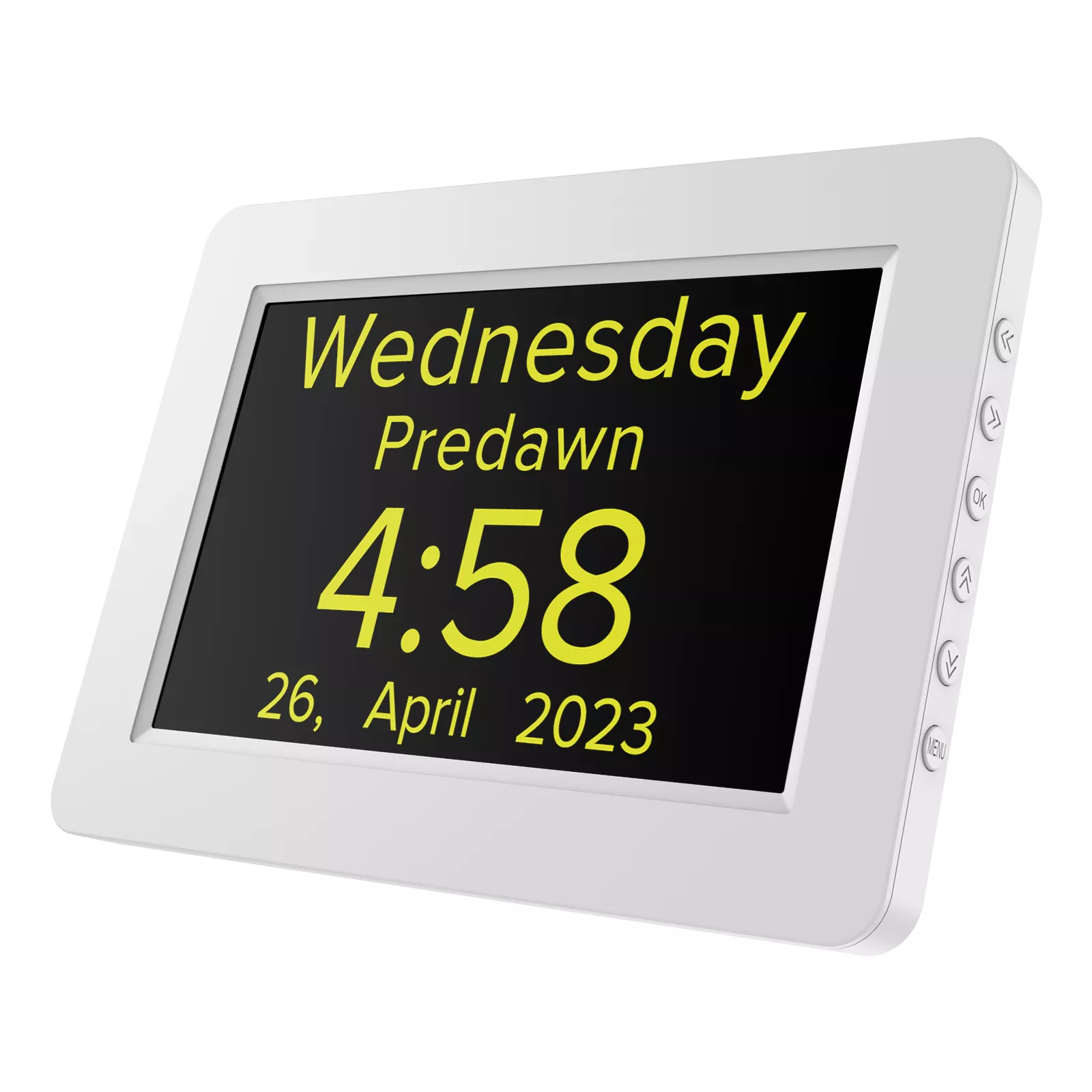
For seniors living with memory challenges or dementia, maintaining orientation to time and day can be incredibly difficult. A Dementia Day Clock provides clear visual cues, helping reduce confusion and anxiety. Unlike traditional clocks, these clocks display the full day, including morning, afternoon, evening, and night, along with the date and sometimes even the week. This simple yet effective tool supports independence, helps caregivers manage daily routines, and enhances overall quality of life.
By using a Dementia Day Clock, families can see tangible improvements in their loved ones' daily functioning. Seniors experience fewer moments of disorientation, and caregivers can plan schedules more effectively. Shenzhen Preation Technology Co., Ltd. offers a range of these clocks designed for clarity, simplicity, and reliability.
What Are the Key Features of a Dementia Day Clock?
A well-designed Dementia Day Clock prioritizes readability, simplicity, and user-friendliness. Here are the essential parameters:
| Feature | Description |
|---|---|
| Display Type | Large LCD screen with high-contrast text for easy readability |
| Time Format | 12-hour or 24-hour format options |
| Date & Day Display | Full day and date display, including AM/PM, day of the week, and month |
| Alarm Functions | Optional daily reminders for medication, meals, or appointments |
| Power Source | Battery-operated or plug-in for continuous use |
| Size | Screen sizes typically range from 8" to 12", suitable for wall or table use |
| Material | Lightweight ABS or durable plastic casing |
| Language Options | Multilingual support, including English, Spanish, French, and others |
These parameters ensure that seniors, even with cognitive decline, can understand the day and time clearly, reducing stress and enhancing daily routine adherence.
Why Choose a Dementia Day Clock Over Traditional Clocks?
Many families wonder whether a Dementia Day Clock is necessary compared to standard wall clocks. The main differences include:
-
Clarity of Information: Traditional clocks only display hours and minutes, whereas a dementia-friendly clock provides the full context of day, date, and part of the day (morning, afternoon, evening).
-
Reduced Anxiety: By seeing the exact day and time at a glance, seniors feel more oriented and confident, which reduces confusion and agitation.
-
Routine Support: Alarms and reminders help with medication schedules, meal times, and appointments, which traditional clocks cannot offer.
-
Ease of Use: Large, clear fonts and simple layouts are designed specifically for individuals with cognitive impairments, making them much more user-friendly than standard digital clocks.
Choosing a Dementia Day Clock demonstrates a commitment to comfort and safety for elderly family members.
How Does a Dementia Day Clock Support Caregivers?
Caregivers often face the challenge of ensuring seniors remain on schedule without causing stress. A Dementia Day Clock supports caregivers in several ways:
-
Streamlined Routine Management: Alarms and day-part indicators help seniors follow daily routines independently.
-
Reduced Repetition: Seniors are less likely to ask, "What day is it?" repeatedly, giving caregivers more time and peace of mind.
-
Enhanced Communication: Clear visual cues assist in explaining schedules or upcoming events to seniors.
Shenzhen Preation Technology Co., Ltd. designs clocks that integrate these benefits, making them a practical choice for home care or assisted living facilities.
What Makes Our Dementia Day Clock Stand Out?
Shenzhen Preation Technology Co., Ltd. ensures that each Dementia Day Clock meets the highest standards for clarity and reliability. Key differentiators include:
-
High-Resolution Display: Crisp LCD or LED screens for maximum visibility
-
Simple Setup: Easy-to-use interface, suitable for seniors or caregivers without technical expertise
-
Adjustable Brightness: Reduces glare and adapts to different room lighting
-
Battery Backup: Ensures continuity during power outages
These features create a dependable, senior-friendly timekeeping solution that enhances day-to-day life.
Frequently Asked Questions About Dementia Day Clock
| Question | Answer |
|---|---|
| How does a Dementia Day Clock help seniors with dementia? | It provides a clear display of the day, date, and time of day, helping reduce confusion and support independent daily routines. |
| Can the Dementia Day Clock remind seniors about medications? | Yes, most models include customizable alarms for medications, appointments, or meals, offering timely reminders without caregiver intervention. |
| Is the Dementia Day Clock easy to read for seniors with poor eyesight? | Absolutely. These clocks feature large, high-contrast text and optional adjustable brightness to ensure maximum visibility and legibility. |
Which Settings and Locations Are Ideal for a Dementia Day Clock?
Placement of a Dementia Day Clock is essential to maximize its benefits:
-
Living Room: Where seniors spend most of their time to see daily cues frequently
-
Bedroom: Near the bed to provide morning orientation and help with bedtime routines
-
Kitchen or Dining Area: Helps reinforce meal schedules and reduce mealtime confusion
With strategic placement, the clock becomes an integrated part of a senior's environment, supporting their cognitive and emotional well-being.
Conclusion
A Dementia Day Clock is more than just a timepiece; it is an essential tool that supports seniors with cognitive challenges, providing clarity, comfort, and independence. By incorporating clear visual cues, alarms, and simple layouts, it improves daily life for both seniors and caregivers. Shenzhen Preation Technology Co., Ltd. is committed to delivering high-quality Dementia Day Clocks that meet the unique needs of elderly individuals and their families. For more information or inquiries, contact Shenzhen Preation Technology Co., Ltd. today to explore our latest models.
Send Inquiry



X
We use cookies to offer you a better browsing experience, analyze site traffic and personalize content. By using this site, you agree to our use of cookies.
Privacy Policy